


Obtain the PSPO-I PDF Dumps Get 100% Outcomes Exam Questions For You To Pass
PSPO-I Exam Dumps Contains FREE Real Quesions from the Actual Exam
Scrum PSPO-I Exam is a rigorous test that assesses the knowledge and expertise of product owners in various areas, including product strategy, market analysis, user experience design, and agile development practices. PSPO-I exam consists of 80 multiple-choice questions that cover different aspects of product ownership. To pass the exam, candidates must demonstrate a deep understanding of the Scrum framework and its application in product development. Professional Scrum Product Owner I certification is recognized globally and is highly valued by employers who seek professionals with proven skills in product ownership.
NEW QUESTION # 78
Which answer best describes the topics covered in Sprint Planning?
(choose the best answer)
- A. Who is on the team and what team member roles will be.
- B. How conditions have changed and how the Product Backlog should evolve.
- C. What to do and who will do it.
- D. What went wrong in the last Sprint and what to do differently this Sprint.
- E. What can be done, how to do it, and why to do it.
Answer: E
Explanation:
Explanation
Sprint Planning is an event where the Scrum Team collaborates on the work to be performed during the Sprint1. The topics covered in Sprint Planning are:
What can be done. The Product Owner proposes how the product could increase its value and utility in the current Sprint, based on the Product Goal, the Product Backlog, and the latest market and stakeholder feedback. The Developers assess the capacity and the technical feasibility of the work, and select the Product Backlog items that they can commit to for the Sprint. The Scrum Team crafts the Sprint Goal, which is a concise statement of the purpose and focus of the Sprint2.
How to do it. The Developers plan how they will deliver a "Done" product Increment that meets the Sprint Goal. They create a plan for the first days of the Sprint, and decompose the selected Product Backlog items into smaller work items. The Developers also identify any dependencies, risks, or impediments that may affect their work. The resulting plan is captured in the Sprint Backlog, which is owned and managed by the Developers[3][3].
Why to do it. The Product Owner explains the value and the outcome of the work to be done in the Sprint, and how it aligns with the Product Goal and the stakeholder needs. The Product Owner also clarifies the acceptance criteria and the Definition of Done for the Product Backlog items, and answers any questions from the Developers. The Scrum Team ensures that they have a common understanding of the Sprint Goal and the expected product Increment4.
References:
1: The Scrum Guide, November 2020, p. 9
2: The Scrum Guide, November 2020, p. 10
[3][3]: The Scrum Guide, November 2020, p. 10
4: Understanding and Applying the Scrum Framework, Scrum.org, accessed on December 16, 2023
NEW QUESTION # 79
What is the typical size for a Scrum Team?
(choose the best answer)
- A. 7 plus or minus 3.
- B. 9.
- C. 10 or fewer.
- D. At least 7.
Answer: C
Explanation:
The typical size for a Scrum Team is 10 or fewer people, including the Product Owner, the Scrum Master, and the Developers. The Scrum Guide states that " The Scrum Team is small enough to remain nimble and large enough to complete significant work within a Sprint. Fewer than three people decrease interaction and results in smaller productivity gains. Having more than ten people requires too much coordination. Large teams generate too much complexity for an empirical process to be useful. " 1 This means that the optimal Scrum Team size is between 3 and 10 people, depending on the context and the nature of the work.
1: The Scrum Guide2, page 6
2: The Scrum Guide
NEW QUESTION # 80
During a Sprint Retrospective, the Developers propose moving the Daily Scrum to only occur on Tuesdays and Thursdays. Which two are the most appropriate responses for the Scrum Master to recommend?
(choose the best two answers)
- A. Have the Developers vote.
- B. Acknowledge and support the self-managing team's decision.
- C. Coach the team on why the Daily Scrum is important as an opportunity to update the plan.
- D. Consider the request and decide on which days the Daily Scrum should occur.
- E. Learn why the Developers want this and work with them to improve the outcome of the Daily Scrum.
Answer: C,E
Explanation:
The Scrum Master is a servant-leader for the Scrum Team, who helps the team understand and enact Scrum values, principles, and practices1. The Scrum Master also facilitates Scrum events as requested or needed2. The Daily Scrum is a 15-minute event for the Developers to inspect their progress toward the Sprint Goal and adapt the Sprint Backlog as necessary[3][3]. It is a key opportunity for the Developers to plan their work for the next 24 hours and collaborate on any challenges or impediments4. The Scrum Master should coach the team on the purpose and value of the Daily Scrum, and help them find ways to make it more effective and enjoyable. The Scrum Master should also learn why the Developers want to reduce the frequency of the Daily Scrum, and work with them to address any underlying issues or concerns. The Scrum Master should not impose a decision on the team, nor delegate the decision to a vote, as these actions would undermine the self-management and empowerment of the Developers5.
Reference:
1: The Scrum Guide, November 2020, p. 7
2: The Scrum Guide, November 2020, p. 11
[3][3]: The Scrum Guide, November 2020, p. 10
4: Understanding and Applying the Scrum Framework, Scrum.org, accessed on December 16, 2023
NEW QUESTION # 81
The timebox for a Daily Scrum is?
(choose the best answer)
- A. 15 minutes.
- B. Two minutes per person.
- C. 4 hours.
- D. The same time of day every day.
Answer: A
Explanation:
The Scrum Guide states that "The Daily Scrum is a 15-minute time-boxed event for the Development Team to synchronize activities and create a plan for the next 24 hours."1 The Daily Scrum is a quick and simple planning meeting designed to keep everyone in the loop with how other team members are getting on. It ensures that team members are fully aligned with each other and on track to hit the Sprint Goal.
References:
* 1: The Scrum Guide2, page 11
* 2: The Scrum Guide
NEW QUESTION # 82
How much of the Sprint Backlog must be defined during the Sprint Planning event?
(choose the best answer)
- A. Just enough tasks for the Scrum Master to be confident in the Developers' understanding of the Sprint.
- B. Just enough to understand design and architectural implications.
- C. The entire Sprint Backlog must be identified and estimated by the end of Sprint Planning.
- D. Enough so the Developers can create their forecast of what work they can do.
Answer: D
Explanation:
Explanation
The amount of the Sprint Backlog that must be defined during the Sprint Planning event is enough so the Developers can create their forecast of what work they can do. This is because:
Sprint Planning is an event where the Scrum Team plans for the upcoming Sprint. The purpose of Sprint Planning is to align the entire Scrum Team around a common goal and a plan for delivering an Increment that meets that goal.
The Developers are accountable for creating a Sprint forecast, which is a selection of Product Backlog items that they intend to work on during the Sprint. The Sprint forecast should be realistic, achievable, and valuable.
The Developers are also accountable for creating a plan for how they will deliver the selected Product Backlog items as a "Done" Increment. The plan may include tasks, dependencies, risks, estimates, or other information that helps them organize and manage their work.
The amount of the Sprint Backlog that must be defined during Sprint Planning may vary depending on the context, complexity, and uncertainty of the product development. However, it should be enough so that the Developers can create their forecast of what work they can do and have a clear direction for the first few days of the Sprint.
Other options, such as just enough to understand design and architectural implications, the entire Sprint Backlog being identified and estimated by the end of Sprint Planning, or just enough tasks for the Scrum Master to be confident in the Developers' understanding of the Sprint, are not valid answers as they do not reflect what must be defined during Sprint Planning or what is required for creating a Sprint forecast.
References:
[Scrum Guide], page 14, section "Sprint Planning"
[Scrum Guide], page 7, section "Developers"
[Scrum Guide], page 15, section "Sprint Backlog"
[Scrum Guide], page 14, section "Sprint Planning"
NEW QUESTION # 83
Which are characteristics of the Daily Scrum?
(choose the best two answers)
- A. It is held first thing in the morning.
- B. Its purpose is to inspect progress toward the Sprint Goal and adapt the SprintBacklog.
- C. It is free form and designed to promote conversation.
- D. Its location and time remain constant.
- E. It is facilitated by the team lead.
- F. It consists of the Scrum Master asking the team for status.
Answer: B,D
Explanation: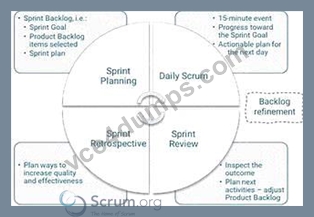
Scrum
the Daily Scrum is a 15-minute event for the Developers of the Scrum Team that is held at the same time and place every working day of the Sprint.The purpose of the Daily Scrum is to inspect progress toward the Sprint Goal and adapt the Sprint Backlog as necessary, adjusting the upcoming planned work1.The other options are not characteristics of the Daily Scrum, as it is not facilitated by the team lead, it does not consist of theScrum Master asking the team for status, it is not held first thing in the morning, and it is not free form and designed to promote conversation234.
1:What is a Daily Scrum? | Scrum.org2:What Is the Daily Scrum? | A Guide to the Daily Event - Scrum Alliance3:What is Daily Scrum? | VivifyScrum4:Daily Scrum | Definition and Overview - ProductPlan
NEW QUESTION # 84
The Product Owner is the person who will be held accountable if a product does not achieve its goals or deliver value. Does this mean that the Product Owner has final say over the Definition of Done?
(choose the best answer)
- A. Yes, the Product Owner decides the Definition of Done. The Developers may be consulted.
- B. No, the Scrum Team decides the Definition of Done, if it is not a standard of the organization. The Product Owner is just one member of the Scrum Team.
Answer: B
Explanation:
The Definition of Done is a shared understanding of what it means for work to be complete, and to ensure transparency. The Scrum Guide states that "The Developers are required to conform to the Definition of Done, as defined by the Scrum Team. If there are multiple Scrum Teams working together on a product, they must mutually define and comply with the same Definition of Done."1 This means that the Product Owner does not have the final say over the Definition of Done, but rather collaborates with the Developers and the Scrum Master to agree on the quality standards and expectations for the product.
References:
* 1: The Scrum Guide2, page 14
* 2: The Scrum Guide
NEW QUESTION # 85
Several Sprints into a project, the Product Owner tells the Scrum Master that a key stakeholder just started using the product. The stakeholder is unhappy with the quality of the product. What are two good options for the Scrum Master?
(choose the best two answers)
- A. Bring the concern to the testers to improve how the Product is verified.
- B. Wait to bring this up until the Sprint Retrospective.
- C. Explain to the Product Owner that it is up to the Developers to decide on acceptable quality standards.
- D. Encourage the Product Owner to put quality specifications on the Product Backlog and express the stakeholder's concern to the Developers.
- E. Coach the Product Owner on how to talk with the Developers about this concern.
Answer: D,E
Explanation:
If a stakeholder is unhappy with the quality of the product, the Scrum Master can coach the Product Owner on how to effectively communicate this concern to the Developers1. The Scrum Master can also encourage the Product Owner to put quality specifications on the Product Backlog1. This allows the Developers to understand the stakeholder's expectations and work towards meeting them1. The Developers are responsible for building quality into the product, but the stakeholders (through the Product Owner) are responsible for setting what is expected in terms of product and process quality1.
NEW QUESTION # 86
True or False: The value delivered by a product can only be determined by revenue.
- A. True
- B. False
Answer: B
Explanation:
The value delivered by a product can not be determined by revenue alone, because:
Revenue is only one aspect of value, and it may not reflect the true impact or benefit of the product for the stakeholders, the users, and the society. For example, a product may generate high revenue, but also cause environmental damage, ethical issues, or customer dissatisfaction.
Value is a subjective and relative concept, and it may vary depending on the context, the perspective, and the criteria of the evaluation. For example, a product may have different value for different segments of customers, or for different markets or regions.
Value is dynamic and emergent, and it may change over time due to various factors, such as feedback, competition, innovation, or regulation. For example, a product may lose its value as new alternatives or solutions become available, or as customer needs or preferences evolve.
Reference:
Scrum Guide 2020, page 6: "The Product Owner is accountable for maximizing the value of the product resulting from the work of the Scrum Team." Scrum Guide 2020, page 11: "The Product Goal describes a future state of the product which can serve as a target for the Scrum Team to plan against." Scrum Guide 2020, page 11: "The Product Owner is accountable for effective Product Backlog management, which includes ... optimizing the value of the work the Scrum Team performs."
NEW QUESTION # 87
Which of the statements about the end of a Sprint is correct?
- A. It is mandatory in Scrum to release a Product Increment at the end of each Sprint.
- B. It is mandatory to create a "done" Product Increment at the end of each Sprint.
Answer: B
NEW QUESTION # 88
When multiple Scrum Teams are working on a single product, what best describes the Definition of Done?
(choose the best answer)
- A. Each Scrum Team defines and uses its own. The differences are discussed and reconciled during a hardening Sprint.
- B. Each Scrum Team uses its own, but must make their definition clear to all other teams so the differences are known.
- C. The Scrum Masters from each Scrum Team define a common Definition of Done.
- D. When multiple Scrum Teams are working together on a product, they must mutually define and comply with the same Definition of Done.
Answer: D
Explanation:
The reason for choosing this answer is that it is consistent with the Scrum Guide1 and the Professional Scrum Product Owner™ (PSPO I) objectives and content2. The Definition of Done is a formal description of the state of the Increment when it meets the quality measures required for the product3. It applies to all Scrum Teams that are involved in creating an integrated Increment, regardless of their size, complexity, or skills12. The Definition of Done ensures that the product meets the expectations and needs of the stakeholders and customers12.
The other answers are not as accurate or appropriate for this question:
* A. Each Scrum Team defines and uses its own. The differences are discussed and reconciled during a hardening Sprint.
* B. The Scrum Masters from each Scrum Team define a common Definition of Done.
* C. Each Scrum Team uses its own, but must make their definition clear to all other teams so the differences are known.
These answers imply that there is no need for a common or shared Definition of Done among multiple Scrum Teams working on a single product12. However, this can lead to confusion, inconsistency, and conflicts in terms of quality standards, expectations, and feedback12. Moreover, having different Definitions of Done can compromise the integrity and value of the product as a whole12.
I hope this answer helps you understand how to apply your knowledge of Professional Scrum Product Owner™ (PSPO I) objectives and content in this question. If you have any further questions or feedback, please let me know. Thank you for using Bing!
References:
* Professional Scrum Product Owner™ (PSPO I) Study guide and documents
* https://www.scrum.org/assessments/professional-scrum-product-owner-i-certification?check_logged
* https://www.scrum.org/professional-scrum-competencies/understanding-and-applying-scrum-framew
* https://www.scrum.org/resources/professional-scrum-competency-developing-people-and-teams
* https://www.scrum.org/professional-scrum-competencies/managing-products-with-agility.
* Definition of "Done" in multiple Team projects | Scrum.org
* https://www.scrum.org/forum/scrum-forum/7286/definition-done-multiple-team-projects
* Definition of Done - Scrum Inc.
* https://www.scruminc.com/definition-of-done/
* The multiple Definitions of Done - Scrum Framework - Agile Uprising ...
* https://coalition.agileuprising.com/t/the-multiple-definitions-of-done/593
* What is a Definition of Done? | Scrum.org
* https://www.scrum.org/resources/what-definition-done
NEW QUESTION # 89
Who is responsible for a high level of quality in a Scrum project?
- A. All Developers.
- B. The Testers
- C. The QA lead.
Answer: A
NEW QUESTION # 90
Which are appropriate topics for discussion in a Sprint Retrospective?
(choose the best three answers)
- A. The value of work currently represented in the Product Backlog.
- B. Definition of Done.
- C. Arranging the Sprint Backlog for the next Sprint.
- D. How the Scrum Team does its work.
- E. Team relations.
Answer: B,D,E
Explanation:
Correct Answers : A, C, and D .
The Sprint Retrospective is an event where the Scrum Team reflects on how they worked together in the last Sprint and identifies ways to improve their collaboration, processes, and quality. Therefore, appropriate topics for discussion in a Sprint Retrospective are:
Team relations: The Scrum Team should discuss how they communicated, interacted, and supported each other during the Sprint. They should celebrate their successes, acknowledge their challenges, and address any conflicts or issues that arose. They should also share feedback, appreciation, and suggestions for improvement with each other.
How the Scrum Team does its work: The Scrum Team should inspect the methods, tools, and practices they used to deliver the product increment. They should evaluate what worked well and what could be improved. They should also identify any impediments, risks, or dependencies that affected their work and how they handled them.
Definition of Done: The Scrum Team should review their Definition of Done and check if it is still relevant, clear, and achievable. They should also assess how well they adhered to it and if they delivered a potentially releasable product increment that meets the quality standards. They should also consider if they need to update or adapt their Definition of Done based on new insights or feedback.
The following topics are not appropriate for discussion in a Sprint Retrospective:
The value of work currently represented in the Product Backlog: The value of the Product Backlog items is the responsibility of the Product Owner, who should continuously refine and order them based on stakeholder needs and feedback. The value of the Product Backlog items is not directly related to how the Scrum Team works together and does not affect their improvement actions for the next Sprint.
Arranging the Sprint Backlog for the next Sprint: The Sprint Backlog is the plan for the next Sprint that is created by the Scrum Team during the Sprint Planning event. The Sprint Backlog is based on the Product Backlog items that are selected for the next Sprint and how the Developers intend to accomplish them. The Sprint Retrospective is not a planning event but a reflection event that focuses on the past Sprint.
Reference:
[Scrum Guide], section 3.5: "The purpose of the Sprint Retrospective is to plan ways to increase quality and effectiveness."
[Professional Scrum Product Owner], chapter 7: "The Sprint Retrospective is an opportunity for the Scrum Team to inspect itself and create a plan for improvements to be enacted during the next Sprint." What is a Sprint Retrospective? | Scrum.org: "During each Sprint Retrospective, the Scrum Team plans ways to increase product quality by improving work processes or adapting the definition of "Done" if appropriate and not in conflict with product or organizational standards." The Sprint Retrospective - What It Is & Tips for Making the Most of Your Meeting: "The focus is on how the team worked together in the last sprint, including: Communication Teamwork Process Tools Systems Work environment Missing competencies Collaboration with external parties"
NEW QUESTION # 91
Why is it important that there is only one Product Owner per product?
(choose the best three answers)
- A. It helps avoid barriers to effective communication and rapid decision-making.
- B. It is clear who is accountable for the ultimate value of the product.
- C. The Scrum Master knows who acts as their backup while on vacation.
- D. The Scrum Team always knows who determines the order of the Product Backlog.
- E. It would confuse the stakeholders if they had to work with more than one person.
Answer: A,B,D
Explanation:
Explanation
The reasons why it is important that there is only one Product Owner per product are:
* It is clear who is accountable for the ultimate value of the product. The Product Owner is accountable for maximizing the value of the product resulting from the work of the Scrum Team. They are responsible for identifying and articulating the Product Goal, which is a long-term objective for the product that guides all the activities of the Scrum Team.
* It helps avoid barriers to effective communication and rapid decision-making. The Product Owner is the sole person responsible for managing the Product Backlog, which is an emergent, ordered list of what is needed to improve the product. They must ensure that the Product Backlog is transparent, visible, and understood by everyone who needs to work on it. They must also collaborate with the Developers and the stakeholders to refine, order, and prioritize the Product Backlog items based on value and impact.
* The Scrum Team always knows who determines the order of the Product Backlog. The Product Owner has the final authority to decide what items are more important and valuable for the product. They must communicate this order clearly and consistently to the Scrum Team and the stakeholders. They must also respect and support the self-management of the Developers in choosing how best to accomplish their work.
Other options, such as the Scrum Master knowing who acts as their backup while on vacation or it would confuse the stakeholders if they had to work with more than one person, are not valid reasons why it is important that there is only one Product Owner per product. They may reflect a misunderstanding of the roles and accountabilities of the Scrum Team or the stakeholders.
References:
* [Scrum Guide], page 6, section "Product Owner"
* [Scrum Guide], page 11, section "Product Backlog"
* [Scrum Guide], page 12, section "Product Backlog Refinement"
* [Scrum Guide], page 11, section "Product Backlog"
* [Scrum Guide], page 7, section "Developers"
NEW QUESTION # 92
Who is the owner of the Product Backlog?
- A. The Product Owner
- B. The whole Scrum Team
- C. The Scrum Master
- D. The Project Manager
Answer: A
NEW QUESTION # 93
In the Daily Scrum, the Scrum Master is not allowed to attend.
- A. FALSE
- B. TRUE
Answer: A
NEW QUESTION # 94
Which two ways of creating Scrum Teams are consistent with Scrum's values?
(choose the best two answers)
- A. The Chief Product Owner determines the new team structures and assignments.
- B. Managers personally re-assign current subordinates to new teams.
- C. Managers collaborate to assign individuals to specific teams.
- D. Bring all the people together and let them organize into Scrum Teams.
- E. Existing teams propose how they would like to go about organizing into the new structure.
Answer: D,E
NEW QUESTION # 95
What three things might a Scrum Product Owner focus on to ensure the product delivers value?
(choose the best three answers)
- A. Velocity is increasing over time.
- B. How much of the functionality of the product is being used.
- C. Direct customer feedback.
- D. Minimizing changes to project scope.
- E. How quickly or easily the product can be absorbed and used by its customers.
Answer: B,C,E
Explanation:
Explanation
The Product Owner is accountable for maximizing the value of the product resulting from the work of the Scrum Team. The Product Owner is responsible for managing and refining the Product Backlog, collaborating with the stakeholders and the Developers, and ordering the items in a way that best achieves goals and missions. The Product Owner represents the interests of everyone with a stake in the product and ensures that the Scrum Team works on the right things at the right time.
To ensure that the product delivers value, a Scrum Product Owner might focus on the following aspects:
How much of the functionality of the product is being used: This is an indicator of how well the product meets or exceeds the needs and expectations of the customers and users. It can also reveal which features or functions are more or less valuable or useful for them. The Product Owner can use various methods or metrics to measure the usage of the product functionality, such as analytics, user behavior, retention, or engagement.
Direct customer feedback: This is a source of valuable input and insights from the people who use or benefit from the product. It can also help to validate or invalidate assumptions or hypotheses about the product value and quality. The Product Owner can use various methods or channels to collect and incorporate customer feedback, such as surveys, ratings, reviews, interviews, focus groups, or social media.
How quickly or easily the product can be absorbed and used by its customers: This is a measure of how well the product delivers value to customers or users in a timely and convenient manner. It can also affect customer satisfaction and loyalty. The Product Owner can use various methods or metrics to measure the ease of use or adoption of the product, such as time to value, learning curve, usability testing, or net promoter score (NPS).
The other options are not valid or relevant aspects that a Scrum Product Owner might focus on to ensure that the product delivers value. They are either too narrow, unrealistic, or unrelated to the product value delivery. They are:
Velocity is increasing over time: This is not a valid aspect that a Scrum Product Owner might focus on to ensure that the product delivers value. Velocity is a measure of how much work a Scrum Team can deliver in a Sprint. It is not a measure of value or quality. It is also not a goal or target for improvement. It is only a planning tool that helps the Scrum Team forecast their future work based on their past performance. Focusing on increasing velocity over time may lead to unrealistic expectations, pressure, or compromise on quality.
Minimizing changes to project scope: This is not a valid aspect that a Scrum Product Owner might focus on to ensure that the product delivers value. Scrum is an agile framework that embraces change as an opportunity for delivering more value to customers and users. Scrum does not have a fixed project scope, but rather an adaptive Product Backlog that evolves as the product and the market change. The Product Owner should welcome and respond to changes in customer needs and expectations, rather than resist or avoid them.
References:
Scrum Guide: https://www.scrumguides.org/scrum-guide.html
Product Owner: https://www.scrum.org/resources/what-is-a-product-owner
Value: https://www.scrum.org/resources/blog/value-scrum-value
Velocity: https://www.agilealliance.org/glossary/velocity
NEW QUESTION # 96
True or False: A Product Owner with multiple teams working on one product should maintain separate Product Backlogs for each team.
- A. True
- B. False
Answer: B
Explanation:
* In Scrum, there is only one product and one Product Backlog for a given product. The Product Backlog is the single source of truth for the Scrum Team and the stakeholders. It contains all the requirements, features, functions, enhancements, fixes, and anything else that can deliver value to the customers and users of the product. The Product Backlog is ordered by the Product Owner based on the product vision, goals, and value.
* Having multiple Product Backlogs for one product would create confusion, duplication, inconsistency, and waste. It would also make it harder to align the Scrum Teams and the stakeholders on the same product direction and priorities. Therefore, a Product Owner with multiple teams working on one product should not maintain separate Product Backlogs for each team.
* The Product Owner is accountable for maximizing the value of the product resulting from the work of the Scrum Team. The Product Owner is responsible for managing and refining the Product Backlog, collaborating with the stakeholders and the Developers, and ordering the items in a way that best achieves goals and missions. The Product Owner represents the interests of everyone with a stake in the product and ensures that the Scrum Team works on the right things at the right time.
* In some cases, when there are multiple Scrum Teams working on one product, it may be necessary to have some form of scaling or coordination mechanism to ensure alignment and collaboration among the teams. However, this does not mean that there should be multiple Product Owners or Product Backlogs.
Instead, there should be ways to facilitate communication, feedback, integration, and transparency among the teams and with the Product Owner. For example, some frameworks or practices that can help with scaling Scrum are Nexus, LeSS, SAFe, or Scrum of Scrums.
References:
* Scrum Guide: https://www.scrumguides.org/scrum-guide.html
* Nexus: [1]
* LeSS: [2]
* SAFe: [3]
* Scrum of Scrums: [4]
NEW QUESTION # 97
What is the responsibility of the Product Owner in crafting the Sprint Goal?
(choose the best answer)
- A. The Product Owner should come to Sprint Planning with a business objective in mind and work with the Developers to craft the Sprint Goal.
- B. The Product Owner defines the scope for a Sprint and therefore also the Sprint Goal.
- C. The Product Owner cannot attend Sprint Planning without having documented the Sprint Goal in advance.
- D. The Product Owner has no responsibility for the Sprint Goal. It is the sole responsibility of the Developers.
- E. The Product Owner must work with stakeholders to set each Sprint's Goal.
Answer: A
Explanation:
Explanation
The Sprint Goal is a short statement of what the Scrum Team intends to achieve during a Sprint. It provides guidance and direction for the Scrum Team, as well as a basis for inspecting and adapting the product and the process. The Sprint Goal is aligned with the product vision and goals, and it reflects the value and purpose of the Sprint.
The Product Owner is accountable for maximizing the value of the product resulting from the work of the Scrum Team. The Product Owner is responsible for managing and refining the Product Backlog, collaborating with the stakeholders and the Developers, and ordering the items in a way that best achieves goals and missions. The Product Owner represents the interests of everyone with a stake in the product and ensures that the Scrum Team works on the right things at the right time.
The Developers are accountable for creating a "Done" Increment that meets the Definition of Done each Sprint. The Developers are responsible for planning and executing the Sprint Backlog, designing and building the product functionality, testing and improving the product quality, and delivering a potentially releasable Increment. The Developers work closely with the Product Owner to understand and clarify the Product Backlog items, provide feedback and estimates, and suggest improvements and innovations.
The Sprint Planning is an event that occurs at the beginning of each Sprint, where the Scrum Team plans how to deliver a valuable product Increment. The Sprint Planning consists of two topics: What can be done this Sprint? and How will the chosen work get done? The outcome of the Sprint Planning is an agreed-upon Sprint Goal, a Sprint Backlog, and a plan for delivering the Increment.
The responsibility of crafting the Sprint Goal is shared by both the Product Owner and the Developers.
The Product Owner should come to Sprint Planning with a business objective in mind, based on their understanding of the product vision, goals, value proposition, stakeholder feedback, market conditions, or other relevant factors. The Product Owner should propose how this objective can be achieved by selecting some Product Backlog items that can deliver value to customers or users. The Developers should collaborate with the Product Owner to craft a clear and concise Sprint Goal that expresses what they want to accomplish as a team during this Sprint. The Developers should also ensure that they have enough capacity and skills to deliver on this Sprint Goal.
References:
Scrum Guide: https://www.scrumguides.org/scrum-guide.html
Sprint Goal: https://www.scrum.org/resources/what-is-a-sprint-goal
Product Owner: https://www.scrum.org/resources/what-is-a-product-owner
Developers: https://www.scrum.org/resources/what-is-a-developer-in-scrum Sprint Planning: https://www.scrum.org/resources/what-is-sprint-planning
NEW QUESTION # 98
The Developers find out during the Sprint that they are not likely to build everything they forecast. What would you expect a Product Owner to do?
(choose the best answer)
- A. Skip Product Backlog refinement activities.
- B. Inform management that more Developers are needed.
- C. Change the Sprint Goal.
- D. Re-work the selected Product Backlog items with the Developers to meet the Sprint Goal.
- E. Cancel the Sprint.
Answer: D
Explanation:
If the Developers find out during the Sprint that they are not likely to build everything they forecast, the best response from the Product Owner is to re-work the selected Product Backlog items with the Developers to meet the Sprint Goal. This is because:
The Sprint Goal is a short-term objective that provides guidance and focus to the Scrum Team throughout the Sprint. It is a flexible and negotiable commitment that can be adjusted as more is learned throughout the Sprint.
The Developers are accountable for creating a "Done" Increment in every Sprint. They must ensure that every Product Backlog item they work on meets the Definition of Done before it is considered complete.
The Product Owner is accountable for maximizing the value of the product resulting from the work of the Scrum Team. They must inspect the Increment at the end of each Sprint and assess how it delivers value and contributes to the Product Goal.
The Product Owner and the Developers must collaborate closely throughout the Sprint to ensure that they have a shared understanding of what they are building and why. The Product Owner must provide clarifications, feedback, and guidance to the Developers as needed to help them create a valuable Increment.
If the Developers find out during the Sprint that they are not likely to build everything they forecast, it means that there is a gap between their initial plan and their actual progress. This may happen due to various reasons, such as new insights, changing requirements, technical challenges, or unforeseen circumstances.
In this situation, the Product Owner should work with the Developers to re-work the selected Product Backlog items to meet the Sprint Goal. This may involve adding, removing, or modifying some items, as long as they still support the Sprint Goal and deliver value. The Product Owner should also communicate any changes or impacts to the stakeholders and customers as appropriate.
Other options, such as skipping Product Backlog refinement activities, informing management that more Developers are needed, changing the Sprint Goal, or canceling the Sprint, are not valid responses from the Product Owner as they do not reflect what should happen in Scrum or how to deal with uncertainty and complexity.
Reference:
[Scrum Guide], page 15, section "Sprint Goal"
[Scrum Guide], page 7, section "Developers"
[Scrum Guide], page 6, section "Product Owner"
[Scrum Guide], page 10, section "Definition of Done"
[Scrum Guide], page 10, section "Increment"
[Scrum Guide], page 10, section "Product Goal"
NEW QUESTION # 99
True or False: Every Scrum Team must have a Product Owner and Scrum Master.
- A. False. A Product Owner can be replaced by a subject matter expert in the Scrum Team.
- B. True. Outcomes are affected by their participation and availability.
- C. True. Each must be 100% dedicated to the Scrum Team.
- D. False. A Scrum Master is only required when asked for by the Scrum Team.
Answer: B
Explanation:
The Product Owner and the Scrum Master are essential roles in the Scrum Team. They have distinct accountabilities and responsibilities that contribute to the success of the product and the team. The Product Owner is responsible for maximizing the value of the product and the work of the Developers. The Scrum Master is responsible for promoting and supporting Scrum and the Scrum Team. Both roles need to be fully engaged and available to the Scrum Team throughout the Sprint.
NEW QUESTION # 100
......
Use Real Scrum Achieve the PSPO-I Dumps - 100% Exam Passing Guarantee: https://certkingdom.vce4dumps.com/PSPO-I-latest-dumps.html